Their passion ignites change, their voices sing with purpose—each one a love letter to a world where everyone belongs.
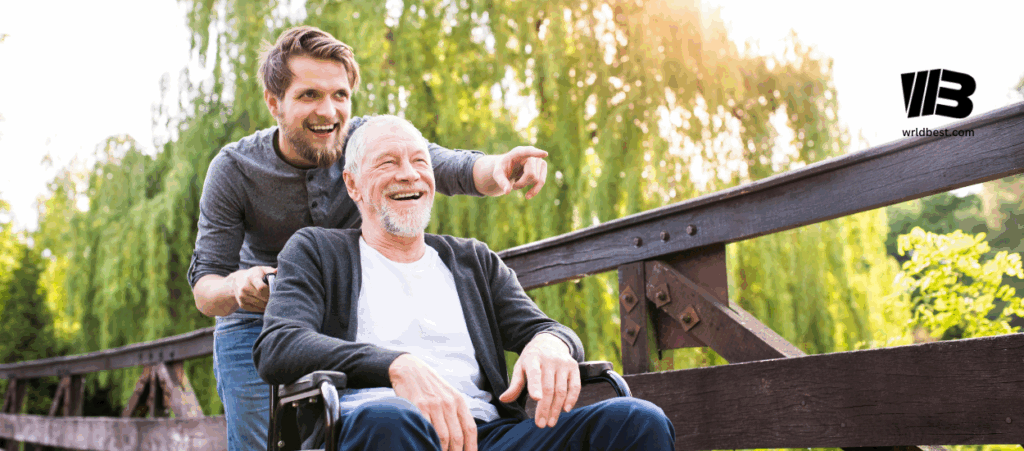
Disability is not a limitation—it’s a lens through which innovation, creativity, and equity are redefined. Across industries as varied as tech, travel, entertainment, music, and social enterprise, a new wave of changemakers is proving that accessibility isn’t just a policy—it’s a movement. From crowdmapping urban barriers to rewriting who gets to be seen on stage or screen, these five leaders are building futures where everyone belongs. Their work isn’t about accommodation—it’s about transformation.
“We’re not inviting you to travel. We’re inviting you to live.”
Maayan Ziv – Mapping Access Through Innovation
When Maayan Ziv launched AccessNow, it wasn’t just to solve a personal challenge—it was to catalyze a global movement. Born with muscular dystrophy, Ziv knows firsthand the barriers disabled individuals face daily. What began as a grassroots project to crowdsource accessibility information has evolved into a powerful platform used in over 35 countries. Maayan’s background in photography and digital media gives her a sharp eye for storytelling, but it’s her unwavering tenacity that makes her a true disruptor in urban design. Whether she’s presenting to city planners or mentoring youth advocates, her work is reshaping public space to serve everyone, not just the able-bodied majority.
What’s striking about Ziv isn’t just her tech savvy—it’s the emotional clarity she brings to a world often distracted by buzzwords. She doesn’t simply push for ramps and elevators—she calls for dignity, equity, and full participation. Under her leadership, AccessNow has collaborated with corporations, municipalities, and nonprofits to ensure that accessibility is no longer an afterthought but a baseline standard. Her impact reaches beyond infrastructure—she’s altering how society defines ability itself.
Check out her website and LinkedIn for more information.
Alvaro Silberstein – Making Adventure Accessible
Alvaro Silberstein refuses to accept a world where accessibility ends at the city limits. After a spinal cord injury left him quadriplegic at 18, he could’ve chosen a safer path. Instead, he decided to hike Patagonia—and made history doing it. That journey birthed Wheel the World, a travel startup that helps people with disabilities book fully accessible travel experiences around the globe. What started as a bold idea now offers trips in over 100 destinations, with real-time accessibility data and tailored itineraries.
Silberstein’s vision is revolutionary because it doesn’t just remove barriers—it opens doors. By pairing detailed logistics with first-person insight, Wheel the World allows disabled travelers to explore with confidence. But more than logistics, Silberstein is advocating for a mindset shift in how we see adventure and inclusion. With each trip booked and barrier dismantled, he proves that disability is not a limitation—it’s an invitation to innovate.
Check out his website and LinkedIn for more information.
Keely Cat-Wells – Redefining Representation
In an entertainment industry obsessed with diversity, Keely Cat-Wells is one of the few walking the walk. As founder of Making Space, a educational platform for deaf and disabled students, she’s pushing for authentic representation, not as a checkbox, but as a standard. Keely, who herself lives with an invisible disability, built her agency to be a bridge between creatives and producers, talent and opportunity, bias and progress. Her clients have appeared in global campaigns and Hollywood films, but her impact is bigger than any reel—it’s in the conversations she’s forcing in boardrooms and writers’ rooms alike.
Cat-Wells doesn’t just advocate for inclusion on screen; she’s reengineering the pipeline behind it. Through partnerships with studios, mentorship programs, and speaking engagements, she’s pushing accessibility into the very bones of the business. Named to Forbes 30 Under 30 and featured by the UN, Keely’s work is making disability a visible and valued part of culture.
Check out her website and LinkedIn for more information.
Lachi – Centering Disability in the Music Industry
As a legally blind recording artist and fierce advocate, Lachi is reshaping how the music industry engages with disability. Founder of RAMPD (Recording Artists and Music Professionals with Disabilities), she’s turning inclusion from an afterthought into an anthem. With RAMPD, she’s connecting artists across genres and access needs, building a coalition where creativity and accessibility go hand in hand. Her own work as a musician—bold, genre-defying, unapologetic—embodies the cultural shift she’s championing.
“When you advocate for yourself, you advocate for everyone like you.”
But Lachi’s power isn’t just in her voice—it’s in her vision. She’s influenced Grammy policies, consulted on event accessibility, and appeared on panels from the White House to SXSW. In every space she enters, she reclaims not just a seat at the table but a spotlight. Her work challenges an industry that’s long sidelined disabled artists and forces it to listen—literally and figuratively.
Check out her website and LinkedIn for more information.
Emily Yates – Designing With Empathy
As an accessibility consultant and travel writer, Emily Yates doesn’t just make spaces more inclusive—she makes them more intuitive. A wheelchair user herself, Yates is the mind behind major initiatives from VisitEngland’s accessibility toolkit to inclusive planning for events like COP28. What sets her apart is her ability to marry technical knowledge with emotional intelligence, creating environments that don’t just meet compliance—they foster belonging.
Her consultancy goes beyond ramps and signage. She educates architects, hospitality leaders, and government bodies on the nuances of lived experience. Yates believes accessibility is everyone’s business—and under her guidance, more businesses are starting to believe it too.
Check out her website and Instagram for more information.
Meegan Winters – Innovating Everyday Inclusion
Meegan Winters wants to make new places feel familiar. With Able Eyes, a platform offering virtual tours of public spaces, she’s addressing a very real anxiety that many individuals with disabilities face: the unknown. Her tool is deceptively simple but deeply transformative, letting users preview venues before visiting, from schools to salons, gyms to grocery stores.
What Meegan offers is peace of mind—and power. As a former special education administrator and lifelong advocate, she knows that independence starts with information. Her mission is to remove uncertainty, one virtual tour at a time, and her platform is quickly becoming an essential resource for families, caregivers, and professionals alike.
Check out her website and LinkedIn for more information.
Shani Dhanda – Building Equity from the Ground Up
Few advocates blend community, commerce, and culture as seamlessly as Shani Dhanda. A social entrepreneur born with a rare genetic condition, Shani has launched initiatives like the Asian Disability Network and Diversability Card to make everyday life more accessible and more equitable. Her work doesn’t just spotlight barriers—it builds scalable, sustainable solutions. Whether consulting for global brands or running community events, Shani brings a lived experience perspective that’s both authentic and actionable.
Her advocacy is deeply intersectional, addressing not just disability but race, gender, and class. That multidimensionality has earned her accolades from the BBC, LinkedIn, and the Shaw Trust Disability Power 100. But beyond the honours, her work is grounded in humanity. With every speech, product, or platform she creates, Dhanda proves that when you design for the margins, you serve the whole.
Check out her website and LinkedIn for more information.
Conclusion
Together, these advocates are reshaping the way we understand inclusion, not as a niche issue, but as a collective imperative. Their stories reflect more than resilience; they represent a cultural shift toward equity by design. Whether it’s through data, storytelling, policy, or performance, these trailblazers are turning barriers into blueprints for a better, more accessible world. Let their work remind us: true progress begins when everyone can participate fully—and lead.
To get even more inspiration, check out 7 Small Businesses in NYC Revolutionizing Sustainable Fashion with Zero Waste and 5 Local Boutiques in Montreal Bringing Unique Home Decor Designs to Life.



















Leave a Comment
Your email address will not be published. Required fields are marked with *