




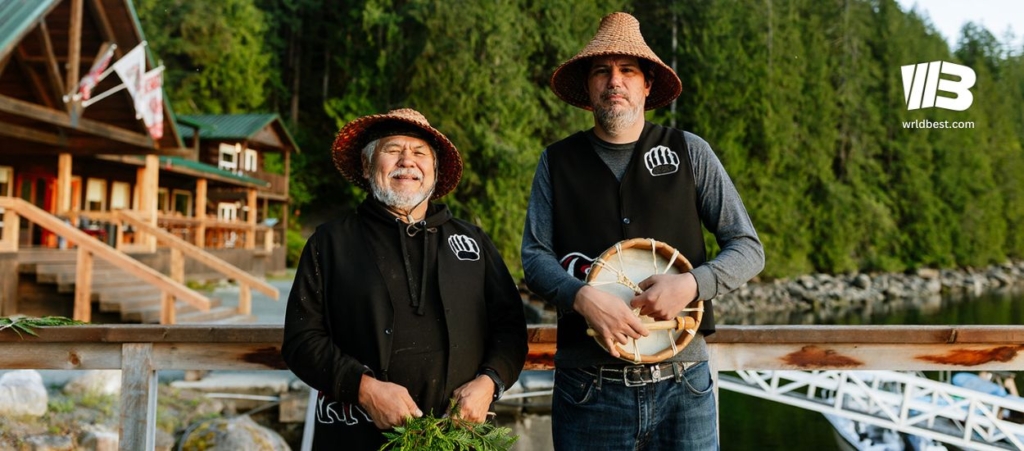
Klahoose Wilderness Resort isn’t just an eco-lodge—it’s a living expression of Indigenous stewardship, storytelling, and soul.
There’s a particular kind of reverence that settles over sacred waters—the recognition that some places hold stories older than memory itself. In the heart of British Columbia’s Desolation Sound, where ancient forests meet pristine waters, a new model of tourism is emerging. This isn’t the extractive wilderness adventure that has too often characterized the industry’s relationship with Indigenous lands. Instead, it represents something profound: tourism rooted in culture, environmental stewardship, and genuine partnership between visitors and the Indigenous communities who have called these places home since time immemorial.
The weight of colonization hangs heavy over much of Canada’s tourism industry. Indigenous lands have been packaged and sold as wilderness adventures with little regard for the people who have called these places home since time immemorial. Too often, eco-tourism operates on the assumption that “untouched” nature exists in a vacuum. This erases the rich cultural heritage and ongoing presence of Indigenous communities.
But nestled in the heart of British Columbia’s Desolation Sound, the Klahoose Wilderness Resort stands as a powerful testament to what tourism can become. When tourism roots itself in respect, reciprocity, and genuine partnership with the land, it transforms completely.
This isn’t just another eco-lodge with a token nod to sustainability. The Klahoose Wilderness Resort, owned and operated by the Klahoose First Nation since 2021, represents something far more profound. It’s a cultural reclamation of narrative, a restoration of relationship, and a reimagining of what it means to truly honor the places we visit.
A Sacred Cultural Reclamation
The journey to Klahoose begins long before you set foot on the floating dock that serves as your gateway to this off-grid sanctuary. Located in the traditional territory of the Klahoose First Nation, the resort exists in a space where the ancient and contemporary world converge. You can only reach it by boat or seaplane. The remoteness isn’t just geographical—it’s spiritual.
The resort’s cedar lodge rooms and cabins position themselves with intentional reverence for the surrounding landscape. Each thoughtfully designed accommodation offers panoramic views of the sound while maintaining a minimal footprint on the land. A run-of-river hydro system provides sustainable power generation. Standard private bathrooms with flush toilets ensure guest comfort. Locally sourced materials blur the boundaries between human shelter and natural habitat.
The accommodations themselves tell a story of thoughtful design and cultural sensitivity. Klahoose and Coast Salish artwork adorns the walls alongside cedar paddles crafted by Klahoose members, each piece carrying stories and teachings that guests learn about during their stay. These aren’t decorative afterthoughts, they’re integral elements of an immersive experience that honors both comfort and authenticity.
Where Culture and Conservation Converge
What distinguishes Klahoose from conventional eco-tourism ventures is its unwavering commitment to education as a pathway to environmental understanding. The resort’s programming goes far beyond typical wildlife viewing or outdoor adventures. Guests participate in traditional food preparation, learning how Indigenous communities have sustainably harvested from these waters and forests for thousands of years.
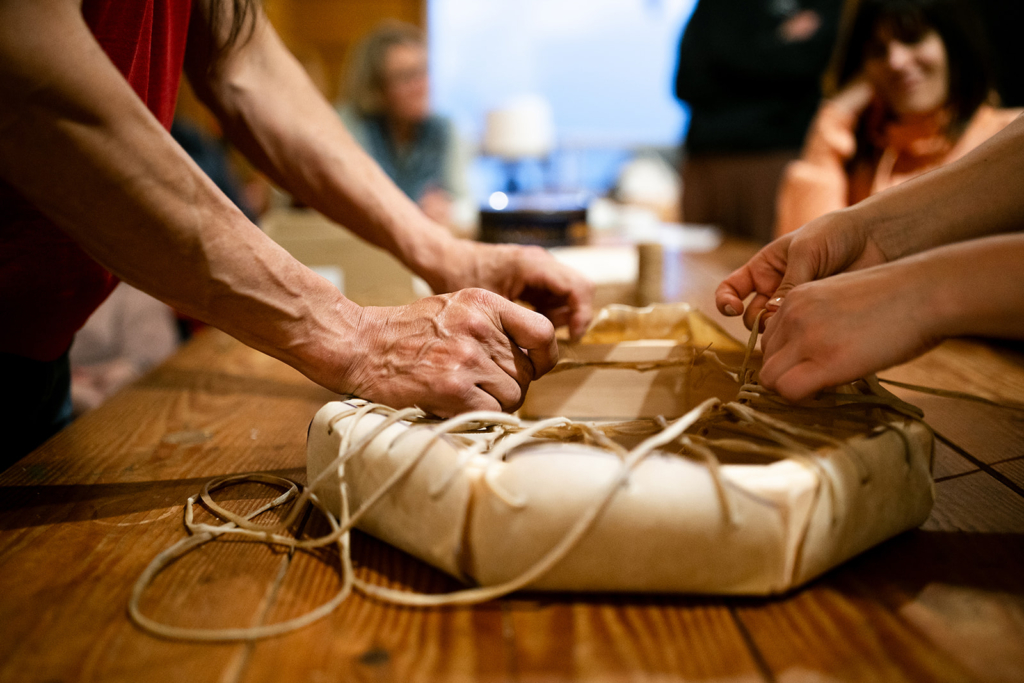
They experience traditional cedar weaving workshops, participate in storytelling circles. They witness ceremony that connects human community to the broader community of all living beings.
The experience begins immediately upon arrival, when traditional songs welcome guests. The burning of sage and a cedar brushing-off ceremony at the conclusion of stays mark the spiritual dimensions of the visit. Community elders share oral histories that map not just the geography of the region, but its spiritual and emotional landscape. Their stories of seasonal rounds, traditional ecological knowledge, and the deep relationships between human and more-than-human communities provide context that transforms a beautiful vacation into a profound learning experience.
Healing Through Hospitality
Perhaps most powerfully, Klahoose Wilderness Resort serves as a space for healing. It heals Indigenous communities reclaiming their relationship with their territory. It heals visitors seeking deeper connection in an increasingly disconnected world. The tourism model here explicitly rejects the extractive approach that has characterized much of the industry’s relationship with Indigenous lands.
Instead, it operates on principles of reciprocity. Economic benefits flow directly to the community while cultural protocols remain respected and maintained. The resort’s Silver-level Sustainable Certification with GreenStep and its alignment with the Sustainable Tourism 2030 initiative represent more than environmental compliance. They reflect a worldview that sees human well-being as inseparable from ecological health.
The resort’s conservation fee supports bear habitat conservation in partnership with the Commercial Bear Viewing Association of BC. This commitment to environmental stewardship reflects an approach that positions visitors as partners in conservation rather than passive consumers of wilderness. Guests witness firsthand how Indigenous-led tourism can contribute meaningfully to habitat protection and species conservation.
The healing dimension extends to the profound sense of peace that settles over visitors as they attune to the natural rhythms of this place. Away from cell service and Wi-Fi, guests rediscover the lost art of being present. They wake to the haunting calls of loons. They fall asleep to the gentle lapping of waves against the dock.
A Model for the Future
As the global tourism industry grapples with its environmental and social impacts, Klahoose Wilderness Resort offers a compelling vision of what responsible travel can look like. The resort’s success demonstrates that authentic tourism doesn’t require the commodification of Indigenous traditions. Instead, it can serve as a platform for cultural reclamation and economic sovereignty.
Young Klahoose community members learn traditional skills alongside contemporary business practices. This ensures that cultural knowledge continues to flow while creating sustainable livelihoods. The economic impact extends far beyond the resort itself. Local artisans sell their work to guests. Traditional food harvesting provides income for community members. The resort’s commitment to sourcing locally creates a ripple effect of economic opportunity.
For visitors, the experience at Klahoose represents a rare opportunity to engage with Indigenous culture in a setting controlled by Indigenous people themselves. Rather than encountering sanitized or commercialized versions of traditional practices, guests witness living culture in its authentic context. They leave not just with photographs and souvenirs, but with a transformed understanding of their relationship to the natural world.
In a world where tourism often leaves places diminished and communities displaced, Klahoose Wilderness Resort stands as proof that another way is possible. Visitors become allies. Economic development strengthens rather than erodes cultural identity. The act of hospitality becomes a form of healing for both host and guest. It’s tourism with a soul, grounded in the recognition that the most beautiful places on Earth are beautiful not because they’re empty, but because they’re home. This is cultural reclamation.
To get even more inspiration check out 7 Small Businesses in NYC Revolutionizing Sustainable Fashion with Zero Waste and 5 Local Boutiques in Montreal Bringing Unique Home Decor Designs to Life.


























Leave a Comment
Your email address will not be published. Required fields are marked with *